
How to Write a Brief for Outsourced Drawing Work
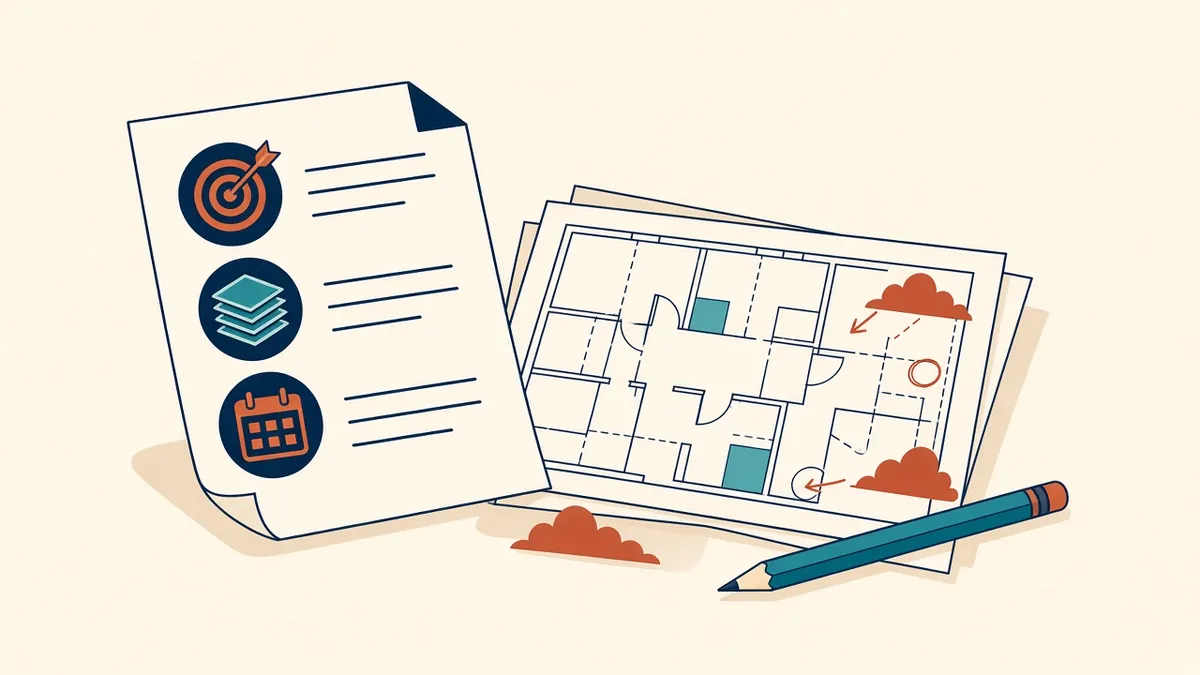
A good brief is the cheapest quality control you'll ever do. A vague one creates rework.
The brief is the most important document in an outsourced task. A clear brief gets work right the first time. A vague one leads to questions, rework and delays. Writing a good brief takes a little time but saves much more later.
A good brief covers the sections below, in a consistent order so the team knows where to find each piece of information.
Project background
- Project name and type
- Location and region, which affects codes and conventions
- Stage, such as design development or construction documents
- Key context, such as client requirements or site conditions
Scope
- What needs to be produced
- What's not included
- Which drawings or model elements are affected
Be specific. "Update floor plans" is less clear than "update level 1 to 4 floor plans to match the attached markups".
Inputs
- Current drawings or models
- Markups and sketches
- Survey information
- Consultant drawings
- Specifications or product data
Make sure inputs are current, and list their versions or dates.
Standards
- Office CAD or BIM standards
- Templates and title blocks
- Layer, line weight and text standards
- Example drawings
- Any project-specific conventions
Deliverables
- File formats, such as DWG, RVT or PDF
- File naming
- Sheet list
- Number of review rounds
Timescale
- Milestones and deadlines
- Review dates
- Any fixed dates, such as authority submissions
Communication
- Main contacts
- How questions should be raised
- Meeting schedule
Keep it organised
A short structured brief is better than a long email thread. Use a template so nothing is forgotten.
Answer questions early
Encourage the team to raise questions as soon as they read the brief. Early questions are a good sign that the brief is being read carefully.
Update the brief
If the scope changes, update the brief in writing. Verbal changes are easily lost.
Common mistakes
- Missing or outdated inputs
- Unclear scope boundaries
- No example drawings
- Deadlines with no review time
- Assuming the team knows project history
Use a brief template
Include examples
Example drawings from similar projects show the expected level of detail better than written descriptions alone.
Confirm understanding
- 01Project background
- 02Scope
- 03Inputs
- 04Standards
- 05Deliverables
- 06Timescale
Keep briefs with the project
Store briefs with project records, so anyone can see what was asked and when.
A good brief turns outsourcing from a series of questions into a smooth production process.
If your team needs extra production capacity for work like this, take a look at our Architectural production services, or tell us about your project.
Related articles

What to Outsource First in Architectural Production
Good starter tasks for outsourcing, and what to keep in-house at first.
Read more →
Managing Scope Changes in Outsourced Work
Handling design changes mid-task without confusion or disputes.
Read more →
Outsourcing Workflow and File Exchange for Architecture Firms
Folder structures, version control and communication habits that keep remote production smooth.
Read more →