
Deferred Submittals in US Permit Applications
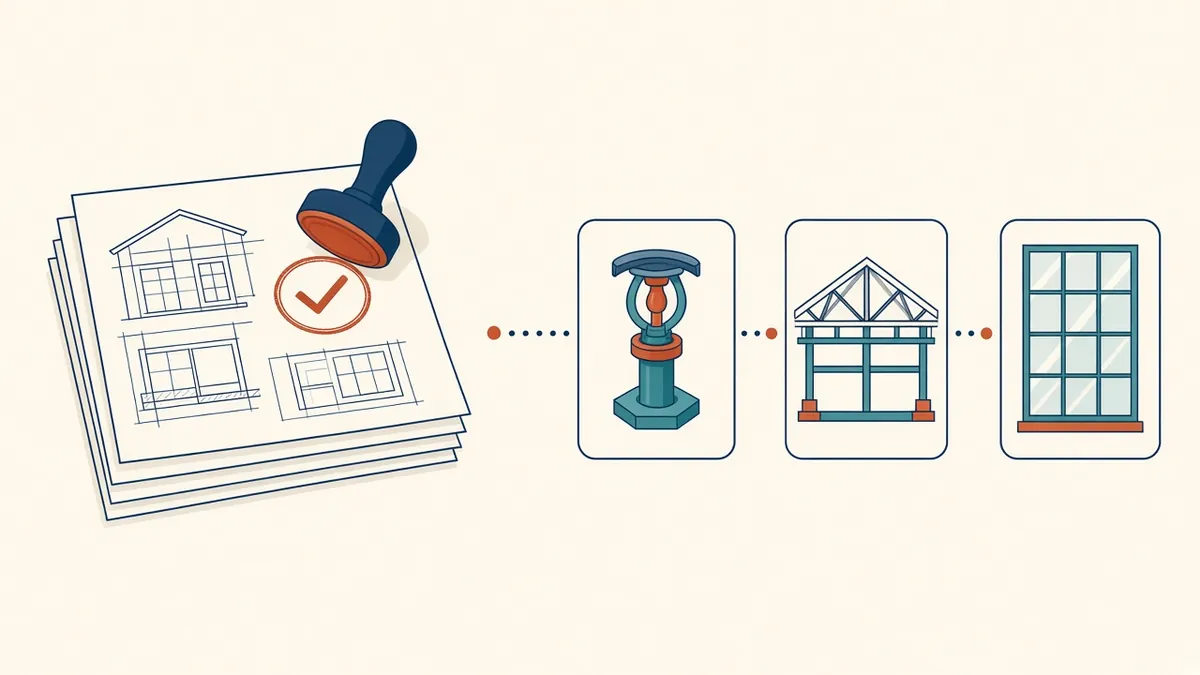
Not every detail is ready at permit time. Deferred submittals let some items follow later, if they're agreed up front.
Some building elements are designed in detail by specialist contractors after the permit is issued. Many US jurisdictions allow these elements to be submitted later as deferred submittals, as long as they're identified in the permit application and approved by the building official.
What deferred submittals are
The IBC allows deferral of certain portions of the design with the building official's approval. The design professional in responsible charge lists the deferred items on the permit documents, and these items are submitted for review before installation. Local procedures vary, so check the jurisdiction's requirements.
Commonly deferred items
- Fire sprinkler systems
- Fire alarm systems
- Pre-engineered trusses
- Curtain wall and storefront systems
- Metal stairs and railings
- Solar panels
- Elevators
- Specialty structural elements, such as canopies
Listing deferred items
The permit set should clearly list deferred items, often on the cover sheet or code analysis sheet. Some jurisdictions require specific wording or forms.
Design intent
Even when detailed design is deferred, the permit drawings should show design intent, such as locations, performance requirements and interfaces with other elements. This helps reviewers understand the overall design.
Review by the design professional
Deferred submittals are usually reviewed by the design professional in responsible charge before being submitted to the building department. This review confirms the submittal is consistent with the design.
Timing
Deferred submittals must be approved before the related work is installed. Late submittals can delay construction. Include them in the construction schedule and track them closely.
Coordination
Deferred items often interact with other elements. For example, truss designs affect mechanical routing, and curtain wall designs affect slab edges and fire stopping. Coordinate early with specialist contractors.
Fees and procedures
Many jurisdictions charge separate review fees for deferred submittals and have specific submission procedures. Check them early and inform the client.
Common problems
- Items not listed on the permit set, so deferral isn't allowed
- Submittals arriving late
- Specialist designs conflicting with the approved drawings
- Unclear responsibility for preparing submittals
Write performance requirements clearly
Specifications for deferred items should state performance requirements, such as loads, fire ratings and movement allowances. Clear requirements help specialist contractors prepare compliant submittals the first time.
- 01What deferred submittals are
- 02Commonly deferred items
- 03Listing deferred items
- 04Design intent
- 05Review by the design professional
- 06Timing
Keep a deferred submittal log
Managed well, deferred submittals let projects start construction while specialist design continues, without compromising code review.
If your team needs extra production capacity for work like this, take a look at our Architectural production services, or tell us about your project.
Related articles
Preparing US Permit Drawings Under the IBC
What US plan reviewers expect to see, and how the IBC shapes a permit set.
Read more →
MEP Shop Drawings: What Architects Should Check
How shop drawings differ from design drawings, and what to look for in review.
Read more →
Facade and Curtain Wall Details: The Architect's Role
Design intent, performance and interfaces for facades designed by specialists.
Read more →