
Planning a Construction Document Production Schedule
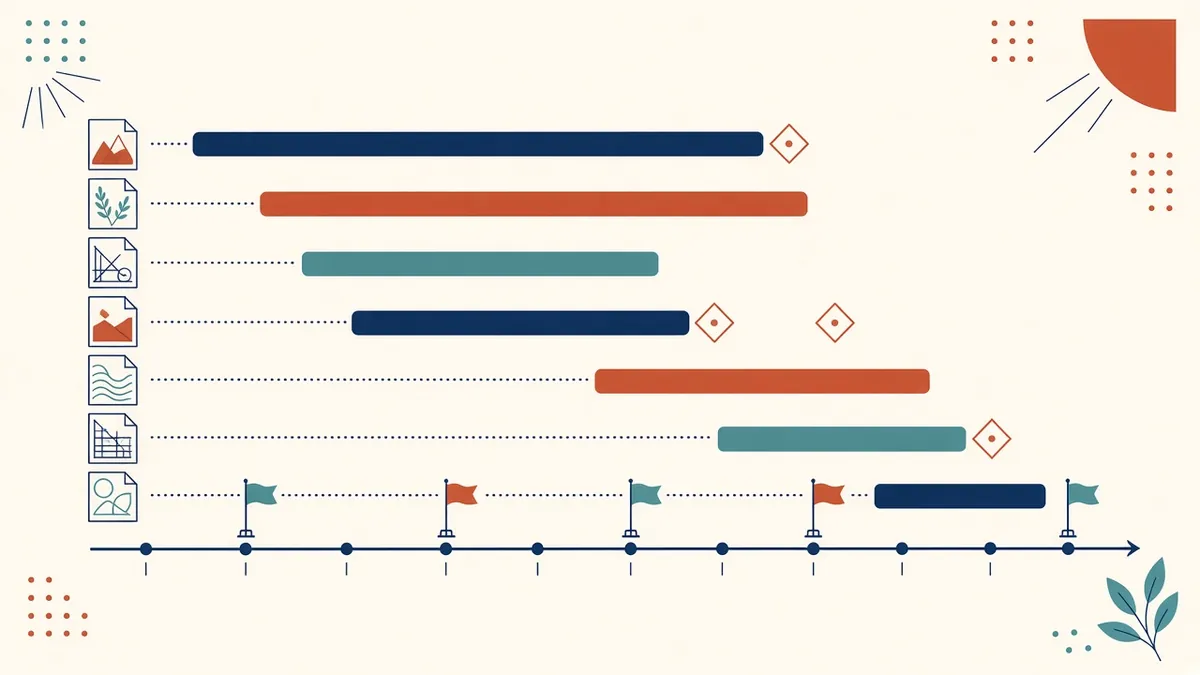
"We'll be done when we're done" isn't a schedule. A CD production plan turns a deadline into weekly, checkable progress.
Construction documents are often produced under pressure, against a permit or tender date that doesn't move. A production schedule turns that deadline into a plan the team can actually follow, and it shows early when something needs to change.
Start with the sheet list
List every sheet expected in the set, by discipline and drawing type. Even rough sheet names help. The sheet list is the most reliable basis for estimating effort, because it describes the actual output.
Estimate effort per sheet type
Different sheets take very different amounts of time. Typical groupings include:
- Plans and RCPs
- Elevations and sections
- Wall sections
- Enlarged plans and interior elevations
- Details
- Schedules
Build in milestones
Common milestones include:
- Consultant background exchanges
- Internal progress sets, such as 50% and 90% CDs
- Client or authority reviews
- QC review before issue
- Final issue
Each milestone should have a clear definition of what's included.
Allow time for review and change
Schedules often fail because they leave no time for reviewing and correcting work. Plan for:
- Internal QC reviews before each milestone
- Picking up client and consultant comments
- Coordination changes from consultants
- A short buffer before the issue date
A schedule with zero slack will slip at the first unexpected change.
Assign responsibilities
Assign sheet groups to named people, including outsourced production support if used. Make sure someone owns cross-checking between groups, because errors often hide at the boundaries.
Track progress honestly
Track progress by sheet status rather than hours spent. A simple status scale, such as not started, in progress, ready for review and complete, gives a clear picture. Weekly updates help the project lead decide early whether to add resources or adjust scope.
Watch the critical path
Some items hold up others, such as structural information needed for wall sections or MEP layouts needed for RCPs. Identify them and chase them early.
When the deadline is fixed
If the plan shows the work won't fit, act early: prioritise sheets needed for the issue purpose, add production support or agree a phased issue. Discovering the problem in the last week leaves no good options.
- 01Start with the sheet list
- 02Estimate effort per sheet type
- 03Build in milestones
- 04Allow time for review and change
- 05Assign responsibilities
- 06Track progress honestly
Learn from each project
At the end of each CD phase, compare planned and actual effort by sheet type. Note what took longer than expected and why, such as late consultant information or design changes. These notes are the best tool for estimating the next project, and they help explain to clients why realistic schedules matter.
A realistic schedule doesn't make CDs easy, but it makes them predictable, and that's what clients and teams value most.
If your team needs extra production capacity for work like this, take a look at our Architectural production services, or tell us about your project.
Related articles
Moving from Design Development to Construction Documents
Setting up the CD phase so design decisions carry through cleanly.
Read more →
Coordinating Consultants During Construction Documents
Exchange schedules, issue logs and reviews that keep consultant drawings aligned.
Read more →
How Architectural Production Outsourcing Works
What's usually outsourced, how engagements start, and where responsibility sits.
Read more →