Intellectual Property in Outsourced Architectural Work
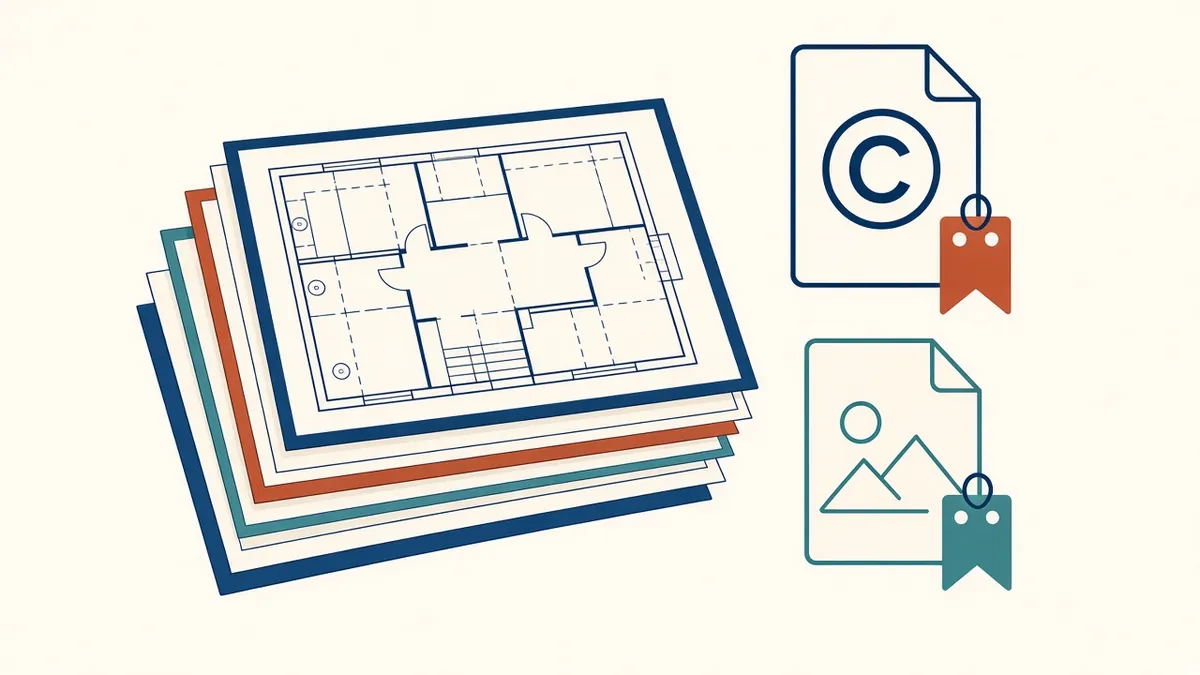
Who owns the drawings when someone else helped produce them? The answer should be written down before work starts.
When an outsourcing partner produces drawings or models, questions arise about who owns them. Practices need clarity on intellectual property (IP) so they can use, modify and license work as their own contracts with clients require.
Why IP matters
Clients often expect practices to grant them a licence to use drawings and models. Practices can only do that if they have the necessary rights to work produced by partners. Unclear IP can create problems later.
Copyright in drawings
In many jurisdictions, copyright in drawings belongs to the author or their employer, unless an agreement says otherwise. When a partner produces drawings, an agreement should set out how rights pass to, or are licensed to, the practice. Laws differ, so take legal advice.
What agreements should cover
- Ownership or licensing of drawings and models produced
- Rights to modify and reuse the work
- Ownership of templates, families and standards provided by the practice
- Ownership of tools or content created by the partner during the work
- Restrictions on the partner reusing project information
- Moral rights, where applicable
Practice materials
Templates, standards, families and details shared with the partner usually remain the practice's property. Agreements should make clear that the partner can only use them for the practice's projects.
Partner tools
Partners may use their own scripts, families or tools. Agree whether these become part of deliverables, and on what terms.
Third-party content
Families from manufacturers, standard details and software content may have their own licence terms. Make sure use is permitted.
Confidentiality and IP
IP and confidentiality are related but different. Confidentiality protects information from disclosure. IP determines who owns and can use the work. Agreements should cover both.
Portfolio use
Partners may want to show work in portfolios. Agree whether this is allowed and on what terms, considering client confidentiality.
Client contracts
Keep records
Keep signed agreements and records of what was produced by whom. They help if questions arise later.
Review agreements periodically
As the relationship grows, the type of work may change. Review agreements to make sure they still cover what the partner produces, such as new types of content or tools.
- 01Why IP matters
- 02Copyright in drawings
- 03What agreements should cover
- 04Practice materials
- 05Partner tools
- 06Third-party content
Explain terms clearly
Make sure partners understand IP terms in practical language, such as not reusing your families on other clients' projects.
Clear IP arrangements protect the practice, the client and the partner, and avoid disputes over who can use the work.
If your team needs extra production capacity for work like this, take a look at our Architectural production services, or tell us about your project.
Related articles

Data Security and NDAs in Architectural Outsourcing
Confidentiality agreements, access control and secure file sharing.
Read more →
How to Choose an Architectural Outsourcing Partner
The questions to ask before you choose a production partner.
Read more →
Licensing, Stamping and Responsibility When Outsourcing
Why sign-off stays with the practice, and how review supports it.
Read more →