
Environmental Analysis in Early Design
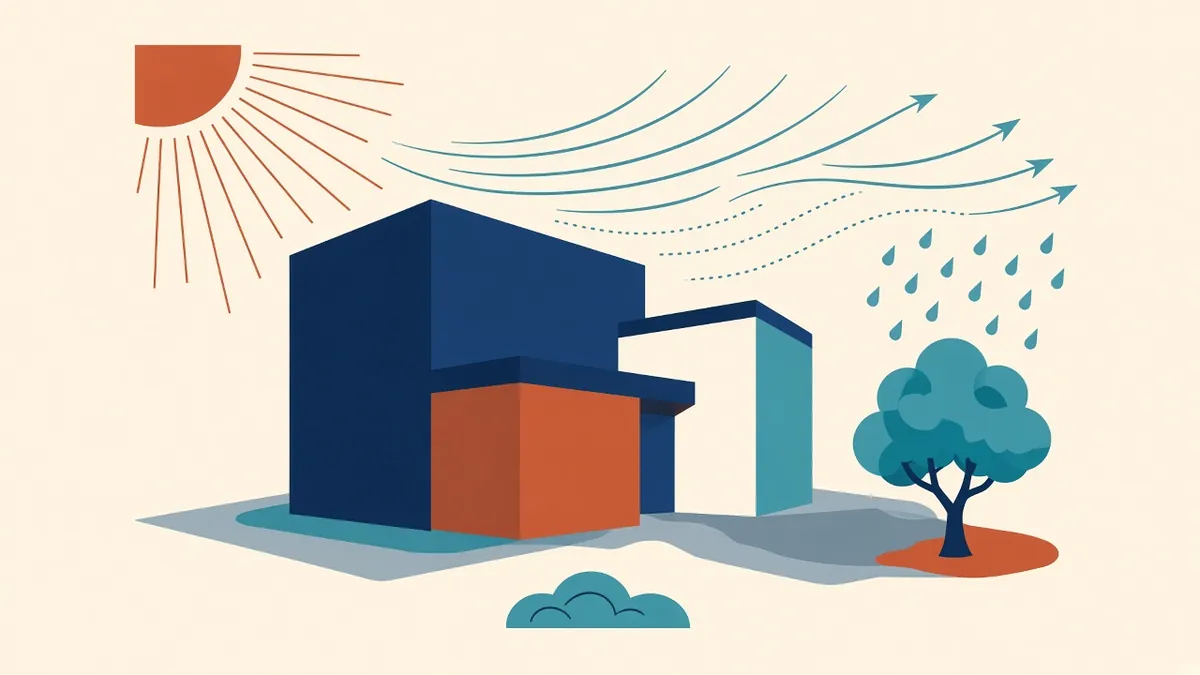
Sun, wind and climate shape a building's comfort and energy use. Early analysis makes them part of the design, not an afterthought.
Early design decisions, such as orientation, massing and window placement, have a big effect on a building's environmental performance. Environmental analysis at this stage helps test options while changes are still easy.
Types of early analysis
- Solar studies: sun paths, shading and solar radiation on surfaces
- Daylight: how much daylight reaches interior spaces
- Wind: patterns around buildings and comfort at ground level
- Energy: early estimates of heating and cooling demand
- Thermal comfort: risk of overheating or cold
Tools
Common tools include plugins for modelling software, such as Ladybug Tools for Rhino and Grasshopper, built-in analysis features in some BIM and design software, and dedicated simulation software. Choose tools suited to the question.
Climate data
Analysis uses weather files for the location, such as EPW files. Use data for the right location and consider future climate scenarios for long-life buildings.
Comparing options
Early analysis is most useful for comparing options, such as different orientations or shading strategies. Relative differences are often more reliable than absolute numbers.
Simplify sensibly
Early models are simple. Keep the level of detail appropriate, and note assumptions.
Interpret results carefully
Integrating with design
Analysis should inform design discussion, not just produce images. Share findings with the team and client.
Specialist input
Detailed analysis, such as compliance energy modelling or wind tunnel studies, is usually done by specialists later. Early studies help prepare for it.
Regional focus
Hot climates, such as the UAE, may focus on solar gain and shading. Cooler climates, such as the UK, may balance solar gain, daylight and overheating risk.
Recording
Common early questions
- Which orientation reduces unwanted solar gain?
- How deep can floor plates be and still get good daylight?
- Where will shading be most useful?
- Are outdoor spaces sheltered from wind?
Focusing on clear questions keeps analysis useful.
- 01Types of early analysis
- 02Tools
- 03Climate data
- 04Comparing options
- 05Simplify sensibly
- 06Interpret results carefully
Communicating results
Use simple diagrams and comparisons, and explain what the results mean for the design.
Early environmental analysis helps design better-performing buildings from the start.
If your team needs extra production capacity for work like this, take a look at our Architectural production services, or tell us about your project.
Related articles
Daylight and Sunlight Analysis Explained
Common metrics and guidance for daylight in and around buildings.
Read more →
Site Analysis Basics for Architects
Context, climate, access and constraints, mapped before design.
Read more →
Showing Energy Code Compliance on Drawings
Insulation, glazing and air tightness information reviewers look for.
Read more →